Where are we
We finished our study of the Genealogy of Adam, the second genealogy given in the Scripture.
Just as Scripture proclaims that the first man, Adam, brought death, the first genealogy we read in Genesis 4—the genealogy of Cain—showed the spread of sin, death, and destruction. While the second Adam gave life, the second genealogy in Scripture, which we refer to as the genealogy of Seth, led us to our Lord and Savior, Jesus Christ.
As we studied the second genealogy, we saw that though death was the repeated refrain in Genesis 5, we were also able to see what was within that genealogy; a desire, a thirst, to seek the truth, and the righteousness of God.
The genealogy ended with Noah and his sons, and as we entered Genesis 6, we focused our attention on the first two verses, which speak about the sons of God.
And as we studied those verses, we saw that the real reason for the corruption of the earth was our own evil heart. That is what our good Lord pointed out when He looked back at the days of Noah.
Even if fallen angels were involved, Scripture points out that the root of the problem was the corruption within the human heart.
Genesis 6 starts the narrative of the flood. Genesis 7 will bring in the flood, and Genesis 8 shows the water receding from the earth and Noah and his family stepping out of the Ark.
Our focus today will be from Genesis 6:3 to Genesis 6:13.
As we enter Genesis 6, there are so many things we can spend time studying in this chapter. It is an extremely rich chapter, especially for a group like us who loves to scratch beneath the surface of every verse we read.
For example, we will read:
- Man’s flesh will be only 120 years, what does that mean?
- We will read about giants in the earth in those days, and their children who became the mighty men of old. Who are they?
- God makes an incredible statement that He will destroy man along with every creature He created. What is the tipping point of sin?
- We will read about the corruption of man, the sin of man, and God states that the entire earth is filled with violence. What is this violence? Is it bloodshed and war between humans?
- We will read the incredible statement in Genesis 6:8, that Noah found grace in the eyes of the Lord. How did he find grace, and why Noah alone?
- God then repeats the Genealogy of Noah, though He had already given this genealogy in the previous chapter. Why would God do that?
- Then God gives the blueprint and the materials required for the Ark.
- We know that eventually, when the Ark is built, only one family will walk into the Ark. Though there were so many people like Enoch, Lamech, Methuselah, and Noah, who did no one believe the message?
- Or did they believe, and it was not enough just to believe?
- If the message was rejected, why was it rejected?
- Does Scripture teach us why Noah’s message and the testimony of the physical Ark was rejected?
Though there are so many things we can cover, I believe the most important aspect of this whole chapter is in Genesis 6:6 – the good Lord grieved in His heart.
- How could God grieve?
- Why would God grieve?
- Is it not easy for God to wipe us all out and create a new generation, a new world?
- What is the heart of God, that a mortal man like us could cause Him to grieve?
- How does God grieve?
- Can we know when God grieves?
My Spirit shall not strive
We will proceed verse by verse, starting with verse 3.
Genesis 6:3 – And the Lord said, “My Spirit shall not strive with man forever, for he is indeed flesh; yet his days shall be one hundred and twenty years.”
As we read in Genesis 4, sin had exploded, man’s earthly wisdom had grown, and man thought he could do whatever he wanted. The fragility of man remains a mystery to him, even today. We all live as if there is no death.
We save for retirement because we know that there will come a day when our bodies no longer have the strength to work. Yet for some reason, we do not consider death, which is even more inevitable, and at times comes sooner than retirement age.
Nothing has changed from the time before the flood until now. We continue to live as if we will never die. We live with the motto, “This is one life, so let us live it to the fullest,” not realizing that this is not the best life for us. Our best life is yet to come.
This is the worst part of our life: the life we live on this earth today, away from our Savior, among sin and sinful men.
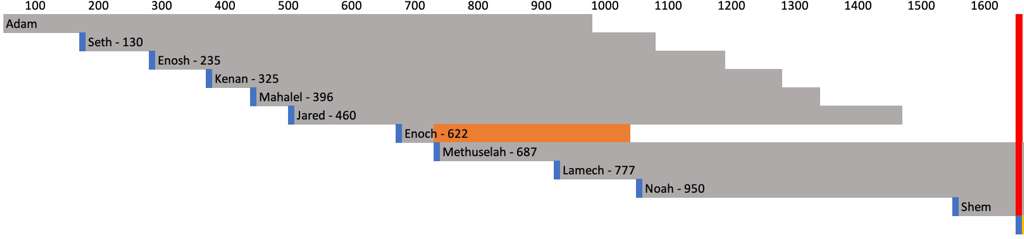
The Lord had been patient. It had been more than 1,500 years since sin entered the earth. And now the Lord speaks, saying that His Spirit will not strive with man forever.
The word translated “forever” is olam, which can carry the meaning of “everlasting,” “perpetual,” or “for an indefinite duration.” So the understanding is that the good Lord is proclaiming that He will not contend or struggle with man forever. There is an end to His long-suffering with sin. He is not eternally suffering; He is long-suffering.
The word translated “strive” comes from the Hebrew word din, which can mean to judge, contend, plead, or rule. The context determines the best English translation.
In this context, the translators understood “strive” to be the best rendering, meaning to contend effort.
But the Septuagint gives us another helpful angle. It uses the Greek word katameino, which carries the idea of remaining, continuing, or abiding. The Septuagint was often used in the New Testament world and is quoted in many places in the New Testament.
So, the good Lord says that His Spirit will not abide with man permanently. Why? Because as New Testament believers, our hope is that Christ abides in us.
So, this verse sets up the understanding of what we are studying further. The Lord’s desire is to abide with us. But as we study further, we will see that the corruption of the human heart and the violence that filled the earth grieved the Lord and broke that relationship.
The Lord continues with a reason in the same verse. Let us read that.
For he is indeed flesh
Genesis 6:3 – And the Lord said, “My Spirit shall not strive with man forever, for he is indeed flesh; yet his days shall be one hundred and twenty years.”
The Lord gives the reason: because man is flesh. Now, that sounds like an obvious statement, but the understanding is that the good Lord is declaring man is fleshly, carnal, and ruled by the fallen nature. He is not walking in the spirit, He is walking by his carnal nature.
That is why, in the New Testament, the good Lord reminds us that without being born again, we cannot see or enter the kingdom of God. It does not matter how long we live on this earth. If we are not redeemed, if we are not born again, the Lord cannot work in us.
The flesh must die, so that we may live. So the good Lord says that man will now live only for another 120 years.
120 years
Now, there are a few interpretations of this verse. One understanding is that God is restricting man’s lifespan to 120 years. But post-flood, we will see many people live well beyond these years, including Abraham, Isaac, Terah, Peleg, and Eber, who lived 464 years.
The other understanding is that God will bring an end to the flesh in another 120 years, which is very close to our calendar reckoning, for indeed, in about 120 years, judgment would come upon all flesh.
So, taking a step back, we need to understand the context. The Lord had been long-suffering, giving the people on the earth time to repent and receive His Spirit. But since they had not done that, and the earth was now filled with violence, God says that He will not be patient forever. He will bring an end to the flesh in another 120 years.
Now, understand this: God could have destroyed the earth right there. But He did not. God is so patient and long-suffering that he not only gives another 120 years, He also raises up Noah as a preacher and gives the physical Ark as a testimony of the coming end.
Noah’s Ark was not only a vessel of salvation for his family; it was also a visible testimony of the coming judgment to the world.
The sons of God
Now, why would not men repent? We asked this question earlier. Why were they so stubborn? they knew there is a God, they knew the testimony of people who had seen and walked with God. And they saw the Ark, why would they still not believe the message?
I believe, Genesis 6:4 gives us the answer.
Genesis 6:4 – There were giants on the earth in those days, and also afterward, when the sons of God came in to the daughters of men and they bore children to them. Those were the mighty men who were of old, men of renown.
God pauses His statement to show us what the world was like in the days of Noah. There were giants on the earth in those days, and Scripture continues by saying that they were there “also afterward.” This may help explain why we later read of giant peoples even after the flood.
Now understand, the giants were not the sons of God themselves, but the offspring of the sons of God who came into the daughters of men. These giants, the offspring of the sons of God, were the mighty men of old, men of renown.
The way we read “Giants,” we often assume it must mean very tall people. But the Hebrew world is Nephilim. The word is commonly connected to the Hebrew root naphal, meaning “to fall”. So the idea is not only height, but fallen ones.
In Acts 19:35 we read of the people of Ephesus revering an image they believed had fallen from heaven. This shows the human tendency to worship what appears heavenly, powerful, and magnificent rather than the one true living God.
Genesis 6:4 gives us a biblical lens to understand why mankind is so easily drawn to mighty, heavenly, or supernatural power apart from God. We do not have to get too deep into this study, because our focus is not fallen angels, our focus is the heart of man.
Scripture constantly warns us not to put our trust on anything else but God and God alone. Proverbs goes on to say that do not even put your trust on yourself, not on what you think, but rather on God and on His Word.
The visible greatness
But mankind is quick to worship what appears magnificent, rather than trusting the living God, the Creator, People are quick to put their trust in fallen powers that display greatness.
Man rejects the invisible God because he is captivated by visible greatness.
The Ark of God preached righteousness, but the Nephilim displayed power. The natural human heart, the carnal-minded heart will always choose power and might over righteousness and grace.
Look at Psalm 2. | Slide 7
Psalm 2:1 – Why do the nations rage, and the people plot a vain thing?
Psalm 2:2 – The kings of the earth set themselves, and the rulers take counsel together, against the Lord and against His Anointed, saying,
Psalm 2:3 – Let us break Their bonds in pieces and cast away Their cords from us
The people have concluded that they can fight against the Lord and throw off His sovereignty. They are not rejecting the presence of God, rather, they are rejecting His message of righteousness and salvation.
And we will read this all through Scripture.
Herod knew the prophecy and understood the history of Israel. But he still went ahead and killed all the male children, hoping that the Messiah could be vanquished.
We will read in Revelation 13:4-8 that though the people knew that He is God, they will not be willing to bow down. Rather, they will put their trust in the blasphemer, hoping that by receiving his mark, they can throw away the sovereignty of God.
The message of the two witnesses, all the plagues, all the signs of heaven, and the proclamation of the angels that will become visible in the last days will still fall on deaf ears. Why? Because men will prefer to rally behind the blasphemer who shows visible signs and power, hoping he can overthrow God.
Psalm 2 shows the insanity of human rebellion: man does not merely ignore God; man imagines he can break free from God.
The spirit of Genesis 6 continues into the last days: men will still prefer signs, power, and blasphemous leadership over repentance before God.
The same holds true even inside the church walls—we seek signs and wonders, not the sign of which Jesus Christ said that to this blasphemous generation there will be just one sign, the sign of resurrection (Matthew 12:38-40). All those who want eternal life will seek Him. All those who want life and success apart from God will seek the fallen world.
The message of God is righteousness, peace, joy, long-suffering, while the message of the world is lust, power, and peace without God—something that even today the world governments are trying hard to achieve for thousands of years.
But God proclaims that there can be no peace on this earth until the Prince of Peace establishes His throne. There was only one family who wanted that peace. Though the knowledge of God remained, people rejected Him and wanted a human kingdom devoid of peace, love, and righteousness, so that they could embrace their own lust-filled emptiness.
This is why the issue was never lack of evidence. The Ark was visible. Noah preached righteousness. The testimony was there. But man preferred glory without God, power without holiness, and peace without the Prince of Peace.
Wickedness of Man
Genesis 6:5 – Then the Lord saw that the wickedness of man was great in the earth, and that every intent of the thoughts of his heart was only evil continually.
Only 1,500 years had gone by, and now Scripture proclaims that the wickedness of man was great in the earth.
The word wickedness means malice, ill-will, and a desire to hurt and injure. It speaks of someone who is not ashamed to break the law of God.
There is a subtle difference between the words sin, wickedness, and evil. The Lord does not use the word sin in this verse, but He speaks about man’s wickedness and evil.
But understand that both wickedness and evil are outworkings of sin, and they are against the nature of our good Lord.
Sin is the transgression against God. Wickedness is sin practiced in rebellion and malice. Evil is the moral corruption that flows from a heart turned away from God.
The progression from sin to wickedness to continual evil shows the hardening and corruption of the human heart apart from God.
When man sinned in the garden of Eden, that was the first time man’s wickedness was made visible in Scripture. It revealed man’s desire to willfully act against the will of God.
His desire was not merely to be like God, but to know good and evil apart from God. Though he sinned against God and committed this great wickedness against Him, the good Lord was merciful.
Though sin stood between man and God, the good Lord showed the way back to paradise. And the way was God Himself. He gave grace and mercy to Adam and Eve so that the Redeemer could be born, and man’s life would now be led by a singular thought and focus, waiting and desiring for the coming Redeemer. But that was not the norm for mankind.
For in the very next generation, we read that Cain murdered Abel. Even before Cain committed this great wickedness, God warned Cain that sin lay at his doorstep, and its desire is for him. But Cain needed to rule over it.
Genesis 4:7, the good Lord’s warning about sin to Cain, is the first time the word sin is explicitly called out in Scripture. It is compared to an animal crouching and waiting so that it can pounce at the first sign of weakness. That is why, when temptation comes, God says flee from it.
Sin is not passive; it is aggressive and waiting. And God warned Cain, “You need to rule over it, take control of it, and take dominion over it.”
In the New Testament, Scripture reminds us how this is possible. The good Lord says that the One who is inside you is greater than the one who is outside. That is the only way you can take dominion: when you are in the abiding presence of Christ. Apart from Christ, man does not overcome sin; he becomes enslaved to it.
Remember Romans, where we were slaves to sin and unrighteousness, until Christ came and died for us.
Sin progresses
But man’s desire is not to control sin; rather, man’s desire is to do wickedness—a willingness to break the law of God in all malice and unrighteousness.
We need to be aggressive in our faith; that is the only way we can actively fight against this present danger.
Jesus Christ said in Matthew 11:12 that the kingdom of heaven suffers violence, and the violent take it by force, an earnest, pressing, active pursuit after God. Walking into the kingdom of heaven is an aggressive, active, always-growing faith. The Apostle Paul equates it to running, laying aside everything which may slow you down.
Matthew 11:12 – And from the days of John the Baptist until now the kingdom of heaven suffers violence, and the violent take it by force.
If we are passive in our faith and not growing earnestly in our faith, sin is right next to us waiting to pounce on us. Our enemy is always roaming, waiting to pounce, steal, and destroy.
God had been waiting with longsuffering patience for 1,500 years for man to repent. But that was not happening. Sin spreads; righteousness does not. Unholiness spreads, not holiness. Sin spreads through our fallen nature while righteousness comes only from pursuing Christ.
And now the good Lord proclaims that the wickedness of man was great in the earth. It had filled the earth, and every thought of man’s heart was only evil continually.
The phrase “every intent” speaks of the entire frame and imagination of man’s heart. His entire purpose is now filled with evil continually. Mankind as a whole had rejected the goodness of God. Mankind has completely rejected the understanding of repentance.
The tipping point of sin
What is the tipping point of sin according to Genesis 6:5?
The book of Romans summarizes this for us in chapter 1.
Romans 1:20 – For since the creation of the world His invisible attributes are clearly seen, being understood by the things that are made, even His eternal power and Godhead, so that they are without excuse,
Romans 1:21 – because, although they knew God, they did not glorify Him as God, nor were thankful, but became futile in their thoughts, and their foolish hearts were darkened.
Romans 1:22 – professing to be wise, they became fools,
Romans 1:23 – and changed the glory of the incorruptible God into an image made like corruptible man—and birds and four-footed animals and creeping things.
Romans 1:24 – Therefore God also gave them up to uncleanness, in the lusts of their hearts, to dishonor their bodies among themselves,
Romans 1:25 – who exchanged the truth of God for the lie, and worshiped and served the creature rather than the Creator, who is blessed forever. Amen.
We are there today. We come together to overthrow governments. We come together to set up nations and empires. We come together to worship our work, our abilities.
We have forgotten that the primary purpose of our creation was to seek Him. The reason God is longsuffering is so that we may come back to Him.
When repentance is no longer preached, understand—that we have come to a place where we think we do not require repentance. When goodness, mercy and love are taught to be carried out of man without the presence of God and man’s governance without the Prince of Peace, we have walked away from a repenting heart to a heart of corruption, thinking we do not need God anymore.
The Lord was sorry
Genesis 6:6 – And the Lord was sorry that He had made man on the earth, and He was grieved in His heart.
This will be our final verse of focus for the day. There are two incredible things that are pointed out in this verse. First, the Lord was sorry. Second, the Lord was grieved in His heart.
Let us first try to understand the “sorry” part, and then move on to the “grieving” part.
The word “sorry” in Hebrew is nacham, which is the same root word used for comfort, grief, or relent.
In our normal understanding, the word “sorry” means to feel grieved over something we have done. We were not aware of the outcome; we did it, and now we are sorry. That is how we commonly understand repentance.
That is why it is the same root word. When a man is truly sorry, he repents and turns from the path he was walking.
But when Scripture speaks of God repenting, it is not speaking of a failure in God, as though God had to correct something. Rather, it points to a change in God’s dealings toward man according to His righteousness, mercy, and covenant purpose.
Can the Lord repent? This is not the only time Scripture records this. Look at 1 Samuel 15:11.
1 Samuel 15:11 – I greatly regret that I have set up Saul as king, for he has turned back from following Me, and has not performed my commandments.” And it grieved Samuel, and he cried out to the Lord all night.
The word “regret” there is the same word, nacham. The good Lord regretted, or relented concerning Saul being king. Who made Saul king? It was the good Lord Himself.
But then look a few verses later in 1 Samuel 15:29.
1 Samuel 15:29 – “And also the Strength of Israel will not lie nor relent. For He is not a man, that He should relent.
Scripture says that God is not a man that He should repent. God cannot fail, and none of His promises can fail. None of His Word can fail. His Word and His deeds will never return void.
If that is the case, then what is the context of these passages in Scripture?
The word relent, or sorry, in this context points to the good Lord not immediately proceeding with what He has declared at that point in time.
It is not that the Word of God has failed. Rather, in His mercy, God does not immediately execute what He has declared.
Let me give a few passages before we return to Genesis 6.
Look at Amos 7. This also points to the Lord stopping, or delaying, what He has set to do.
Before we look at Amos 7:2-3, let us first understand the context. In Amos 6:8, the good Lord has taken an oath by Himself that He will deliver up the city of Israel because of the sin and pride they possess.
That is an oath which the Lord Himself has declared. Will He repent of it? No. Can His Word fail? No.
But in Amos 7:2-3 we see the prophet interceding before the Lord. Let us read it.
Amos 7:2 – O Lord God, forgive, I pray! Oh, that Jacob may stand, for he is small!”
Amos 7:3 – So the Lord relented concerning this. “It shall not be,” said the Lord.
When the prophet intercedes for Israel, the Lord relents concerning what He was about to do at that moment, which is to destroy Israel.
Yet, as we know, Israel was indeed judged because of its sin. The kings were destroyed, and the people were taken captive.
So what did this intercession from the prophet accomplish?
The Lord says in Amos that He has set up a plumb line, which points to our Lord Jesus Christ.
Though the good Lord had declared judgment upon Israel, by His mercy He also set the path for redemption.
Now why would the Lord judge Israel?
Because He had proclaimed to Israel in Deuteronomy that they were a people chosen by God. And if they walked away from God, then God would remove them from the land as a testimony of who He is.
So in Amos, it is the fulfillment of the Word of God which is supposed to take place. Yet even there, God relents, waits, and sets up the promise of the plumb line according to His grace, mercy, and longsuffering nature.
And we will read this in many passages throughout Scripture, especially in the Old Testament—that the good Lord will fulfill His Word, for His Word can never fail.
This is the work of the accuser, the devil, that he takes the Word of God and accuses the children of God before the Lord because they have failed and judgment must come according to His Word.
But this is the work of the Redeemer—that even in the midst of destruction, grace is still provided.
For if we step back, we understand that the punishment of sin is death and eternal separation. And rather than us bearing eternal punishment, the good Lord Himself took it upon Him.
That is God’s way of relenting in mercy, His Word never fails, His promises always remain true, and the One who established the promise will Himself fulfill it by taking up the cross for our sins.
Now let us return to Genesis 6, where the Lord says that He is sorry.
The Lord is about to bring judgment upon the earth, yet remember that when Adam sinned, he received mercy. Why? So that he might return to the Lord through the Redeemer.
When Cain sinned, he also received mercy. Why? So that he too might return to the Lord through the Redeemer.
Why did God wait for nearly 1,500 years? Because God was waiting in longsuffering mercy so that men might repent and return to the Lord through the Redeemer.
But now the tipping point of sin has been reached. The wicked thoughts and imaginations of man are continually evil. And the good Lord declares that this is the end.
Yet even in the midst of destruction, He still keeps His Word. Just as the Lord set up the plumb line in Amos, He now sets up the Ark—the way of redemption for mankind.
This is the relenting of the Lord: He who patiently waited for nearly 1,500 years will wait no longer concerning judgment. Yet that does not mean His promise concerning the Messiah has failed.
Rather, in His mercy, the Lord establishes the Ark so that His promise may continue, and so that redemption may still be available.
But for those who have reached the tipping point of sin, the good Lord will now grieve.
The Lord grieved
Genesis 6:6 – And the Lord was sorry that He had made man on the earth, and He was grieved in His heart.
Why would the Lord grieve? The Lord grieves for the souls that are walking toward eternal destruction.
Yes, even in judgment, mercy is still shown. And all the people in the days of Noah had to do was receive this mercy which God had graciously provided for them.
What is this mercy? It is the Ark of God.
Remember, God is not bringing judgment without mercy. There is mercy, and there is only one way to receive this mercy. There is no other way.
The only option is the Ark, and there is no other.
Think about it: Why would anyone reject the only way out of eternal destruction and separation?
The reason mankind in the days of Noah chose not to receive the Ark was because of what we studied in the previous verses—the love for the lusts of the world and the hatred of the righteousness of God.
Look at the gospel to understand more clearly why the good Lord grieves. Refer to Matthew 23:37.
Matthew 23:37 – O Jerusalem, Jerusalem, the one who kills the prophets and stones those who are sent to her! How often I wanted to gather your children together, as a hen gathers her chicks under her wings, but you were not willing!
The people chosen by God were not willing to come into the Lord’s bosom. They refused to come under the Love of God.
And what did they do?
They rejected, persecuted, and killed those whom God sent for their redemption.
The people of Israel were chosen by the Lord so that they would be the testimony of who God is.
And when His people walked away from God, God sent prophets to them so that they might repent. But what did they do to the prophets who brought the message of repentance?
They rejected them, persecuted them, and often killed them.
So they did not repent, and they hindered the world from receiving Christ. The people of God were doing everything they could to stop the work of the Lord.
The people in the days of Noah knew God, yet they still rejected the work of God. And this is what grieved the heart of God—that the people whom He loved, the people whom He worked to redeem, the people whom He had chosen, would willingly reject the Lord for temporal pleasure.
The Lord grieved over Jerusalem because they willingly rejected the Messiah, not knowing that He alone is the Way.
And today, let me tell you, nothing has changed.
We continue to willingly reject Christ and His work, and we continue to grieve the Lord.
Turn to Ephesians 4:30.
Ephesians 4:30 – And do not grieve the Holy Spirit of God, by whom you were sealed for the day of redemption.
What an incredible statement. Consider this: God has not changed.
He grieved for the people in the days of Noah, yet they rejected His work
God grieved before He went to the cross in Jerusalem, and the people still rejected His work.
Today, the work is finished. Christ dwells in those who have believed in Him. Yet the Holy Spirit is still grieved when people do not understand what it means to be the body of Christ.
Christ is grieved when His children confess His name, carry His name like a banner, yet do not understand what it means to be the dwelling place of Christ—what it means to be the flesh and bone of our Lord Jesus Christ.
Look at Ephesians 5:1-3, for this is what grieves the Lord.
Ephesians 5:1 – Therefore be imitators of God as dear children.
Ephesians 5:2 – And walk in love, as Christ also has loved us and given Himself for us, an offering and a sacrifice to God for a sweet-smelling aroma.
Ephesians 5:3– But fornication and all uncleanness or covetousness, let it not be named among you, as is fitting for saints.
Scripture says that this should be the life of a believer. Just as the people in the days of Noah had their entire lives driven toward evil, God says that our entire lives should be driven toward pursuing Christ and His righteousness.
If this is not our life, then we grieve the Holy Spirit who dwells within us.
We often think only our stumbling grieves the Lord. But the deeper understanding of Scripture is that when we do not desire to be imitators of Christ, we grieve the Holy Spirit.
And why is the Holy Spirit grieved?
Because His desire is that we may be with the Lord, and that we who have the Holy Spirit dwelling within us would become a testimony so that those around us may know the Lord.
But when we refuse to understand the heart of God, the longsuffering nature of God, the love of God, and the patience of God—and we live this life without pursuing Christ and His righteousness as our greatest desire–
Scripture says that this should be a believer’s life. Just like how the people in the days of Noah their entire lives were driven towards evil. God says our entire life should be driven towards pursuing Christ and His righteousness.
If that is not our life, then we will grieve the Holy Spirit who is dwelling in us.
We would consider when we stumble, we grieve, but the understanding of Scripture is when we do not desire to be imitators of Christ, we grieve the Holy Spirit.
And why is the Holy Spirit grieving? He is grieving because His desire is that we may be with the Lord and we who have the Holy Spirit dwells in us would be the testimony so that those around us may know the Lord.
But when we refuse to understand the heart of God, the longsuffering nature of God, the love of God, and the patience of God—and when we live this life without pursuing Christ and His righteousness as our greatest desire—we hinder ourselves, and we become a hindrance to the work of the Holy Spirit among the lost.
The good Lord grieved in Genesis 6 because the people refused to understand that the plan and purpose of God was to give eternal life through Him. Instead, they chose the world and not the Ark.
The good Lord grieved over Jerusalem because the people refused to understand the message of the cross, for it is only through the cross that we receive eternal life.
And the good Lord grieves today because the people of this world, and even many of His own children, still do not understand that it is the pursuit of righteousness which becomes the testimony of God in this fallen world.
Noah was raised up as a preacher of righteousness.
The physical Ark was in place.
Yet people rejected the message.
Today, we are the carriers of this message of righteousness.
And the more we pursue God and His righteousness, the more the work of the Holy Spirit will be evident in us.
The good Lord grieved in Genesis 6 that the people couldn’t understand the plan and purpose of God was to give us eternal life with Him. For they chose the world and not the Ark.
The good Lord grieved in Jerusalem for the people couldn’t understand the message of the cross, for it was only through the cross that we receive eternal life.
The good Lord grieves today for the people of the world, His children have still not understood that it is the pursuit of righteousness which can be the only testimony in this fallen world.
Noah was set up as a preacher of righteousness.
The physical Ark was in place.
But people still rejected the message.
Today, we are the carriers of this message of righteousness.
The more we pursue God and His rigorousness, the work of the Holy Spirit will be evident in us.
In Christ — Noel Kingsley
All content © 2026 Noel Kingsley, www.Jeremiah364.com.
These studies are freely shared for personal growth, family devotion, and group Bible study. You are welcome to reproduce them in full, provided no changes are made and proper credit is given. Please do not use the material for commercial purposes.
Open the Scriptures to see Christ.
Study the Scriptures to know Christ.
Cling to the promises to grow in Christ